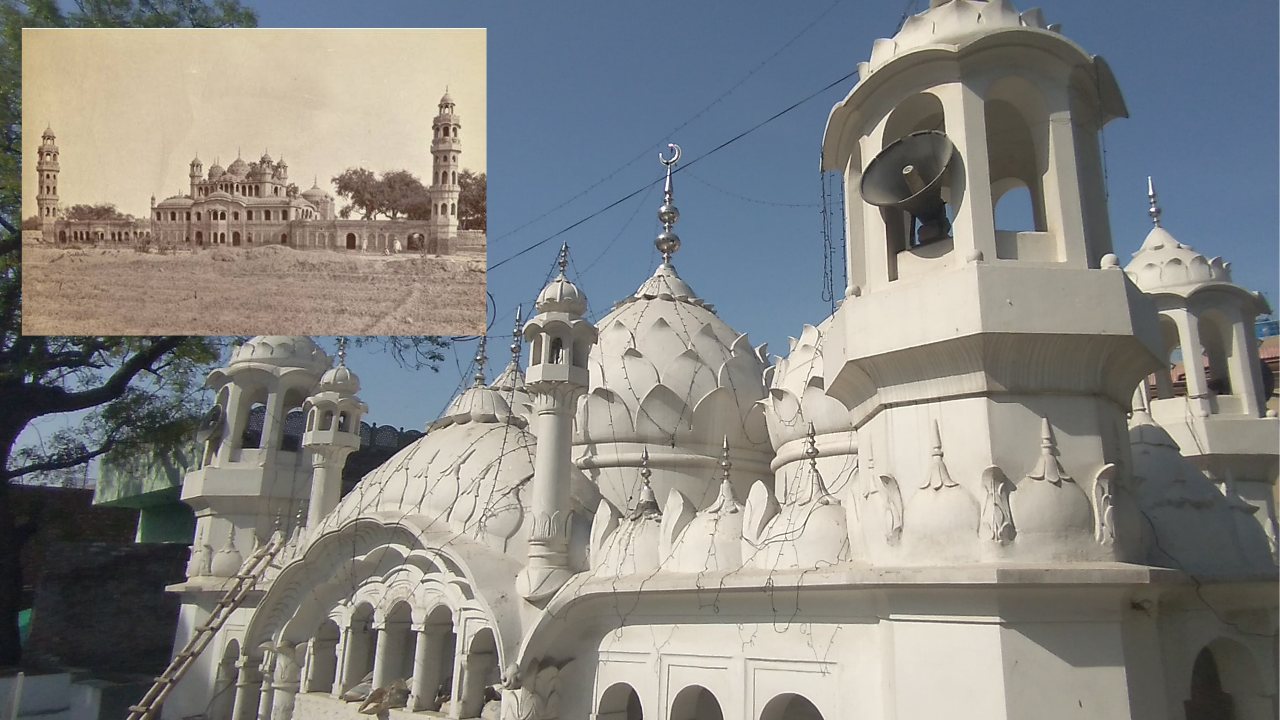
In the heart of Lahore lies Masjid Sardar Jahan Mozang, a quiet witness to centuries of faith and change. This mosque is not only part of the city’s heritage but also part of my own story. My family has lived in the Mozang area for more than 150 years. I have always felt deeply connected to this neighborhood because it carries the true spirit of old Lahore.
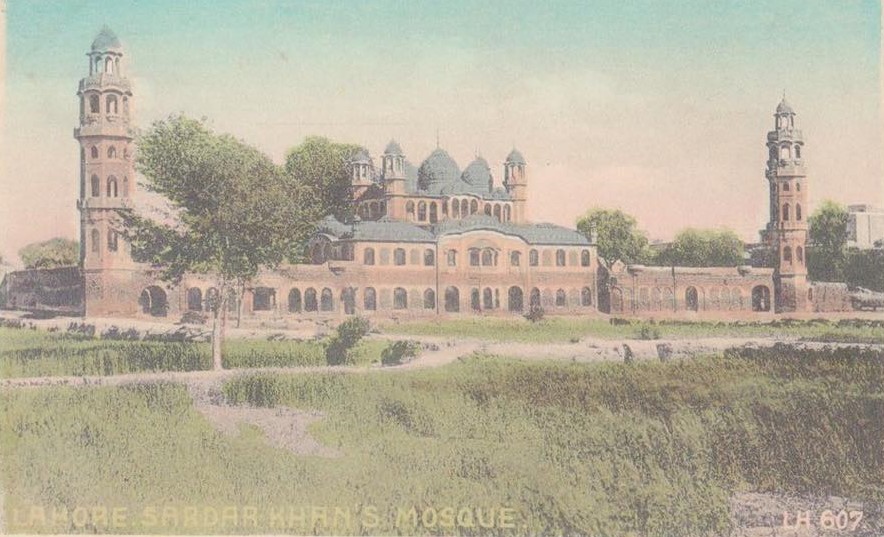
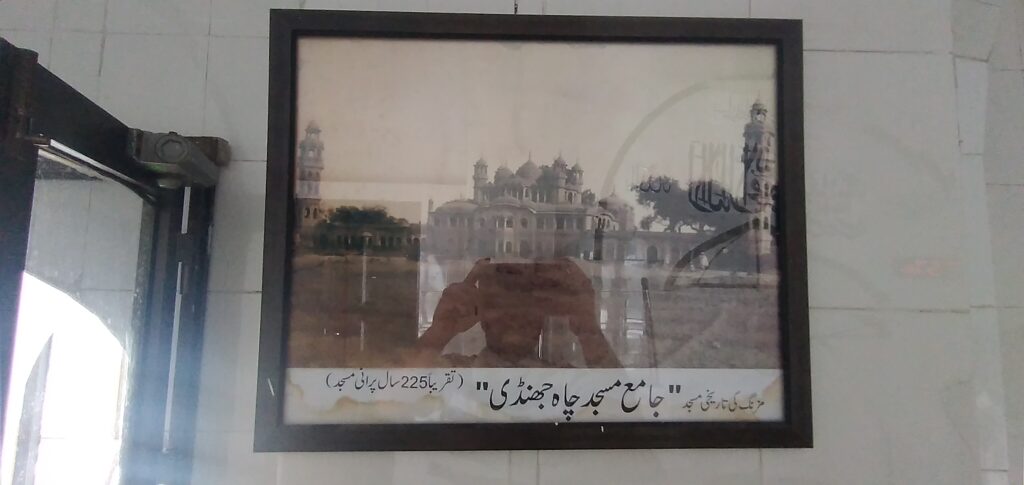
The biggest reference to Mozang’s importance is the Miani Sahib Graveyard, the oldest in Lahore, where many great figures of history are buried. Yet, I always wondered what more this area held besides the famous Walled City and Anarkali. One day, while going through old photographs, I found an archival image of a mosque labeled “Mozang.” It stood alone in an open field with no buildings around it. That photo sparked my curiosity, and I began to research. A few years ago, I finally reached that same spot and found the mosque still standing, though much changed.
History
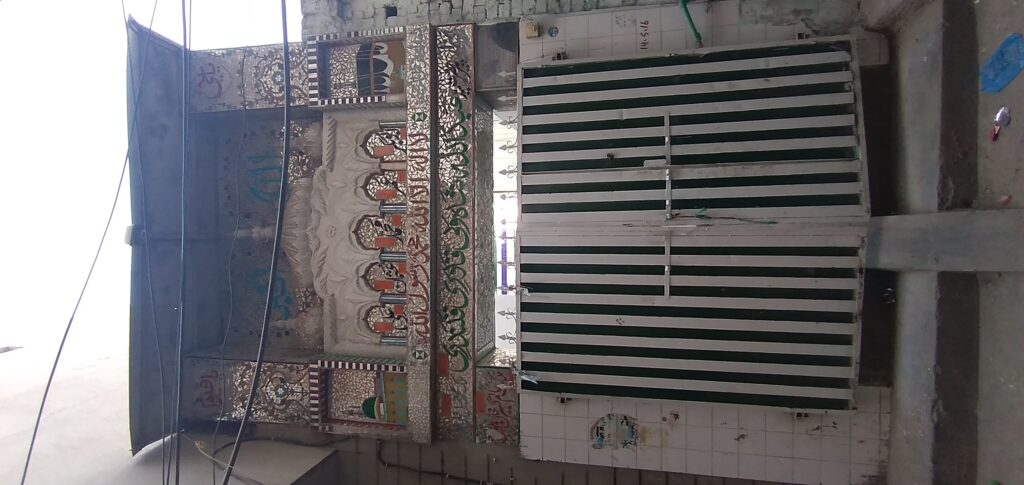
The story of Masjid Sardar Jahan Mozang begins with Hazrat Abdullah Shah Baloch, a respected saint and scholar of his time. He started building the mosque in the late 1700s but passed away in 1798 before completing it. His tomb stands beside the mosque and is still visited by people who seek blessings. The mosque was later completed by his nephew Sardar Khan Baloch in 1859.
The surrounding area came to be known as Kot Abdullah Shah, named in his memory. Old photographs show the mosque surrounded by empty fields, showing how Mozang looked before the city expanded. Over time, the mosque was called by different names such as Masjid Sardar Jahan and Jamia Masjid Char Jhanda Kehlawai. Today it is known as Jamia Masjid Syed Abdullah Shah.
Architecture
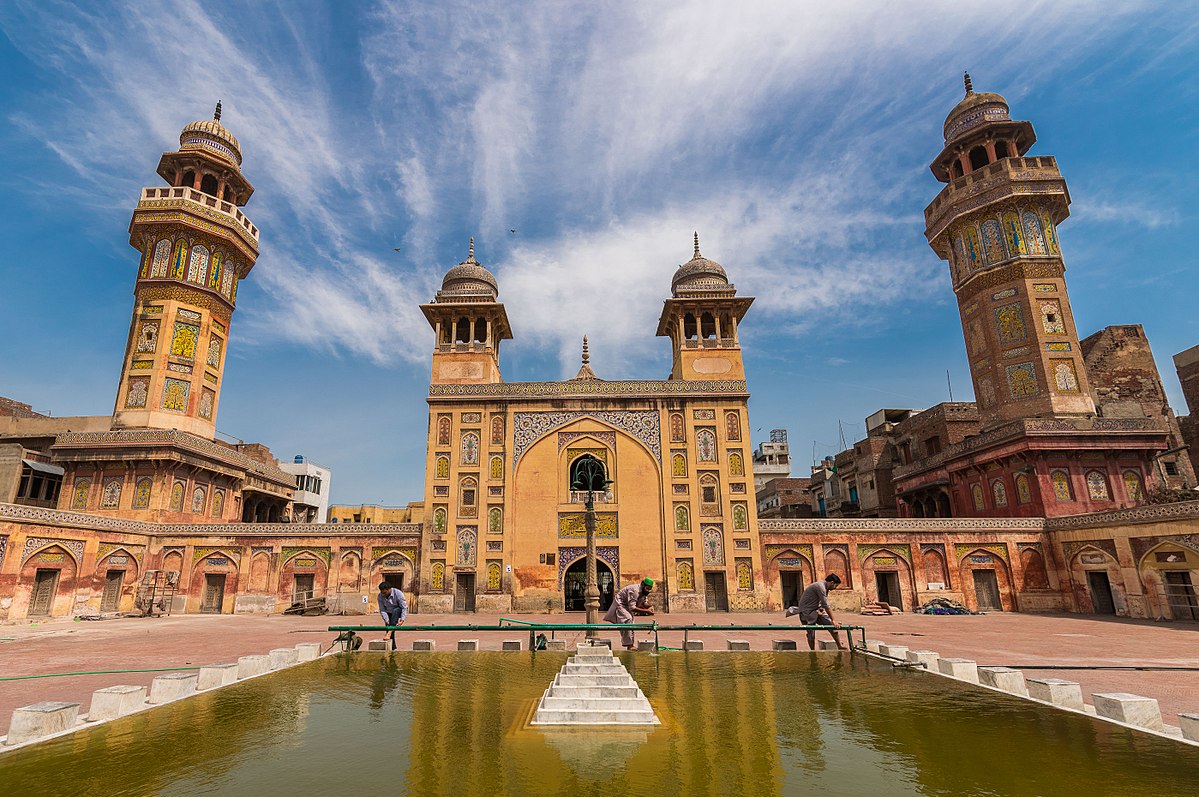
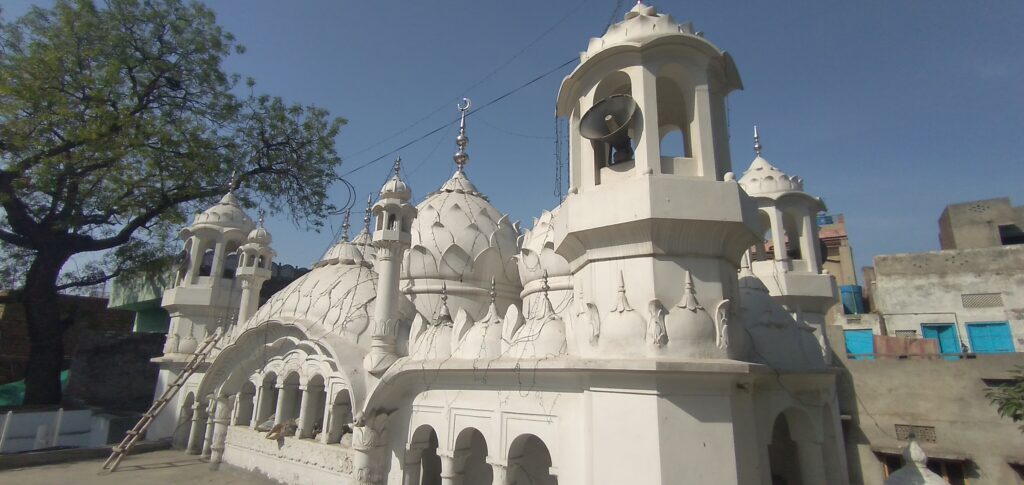
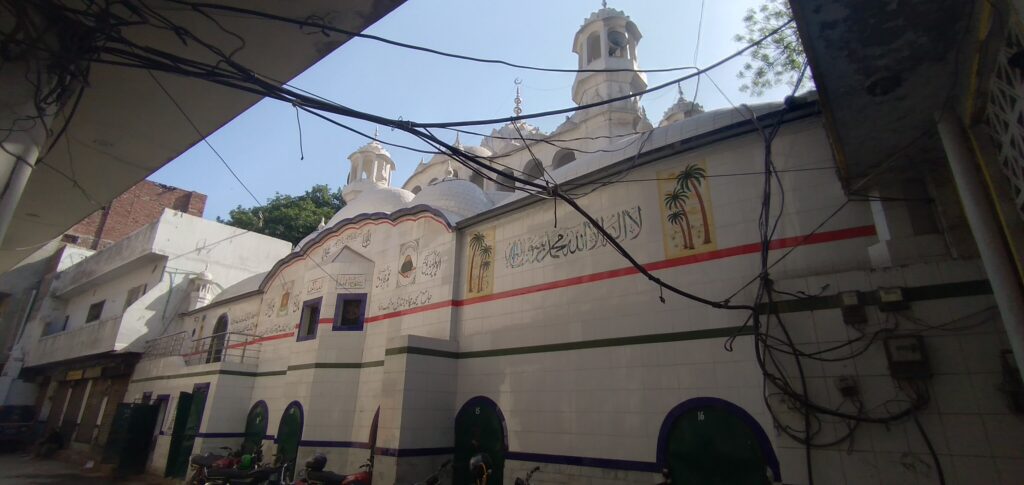
The structure of Masjid Sardar Jahan Mozang reflects the craftsmanship of a different age. It originally had three domes and six minarets, a rare design for its time. Although the minarets have now been removed, the mosque still carries its original charm.
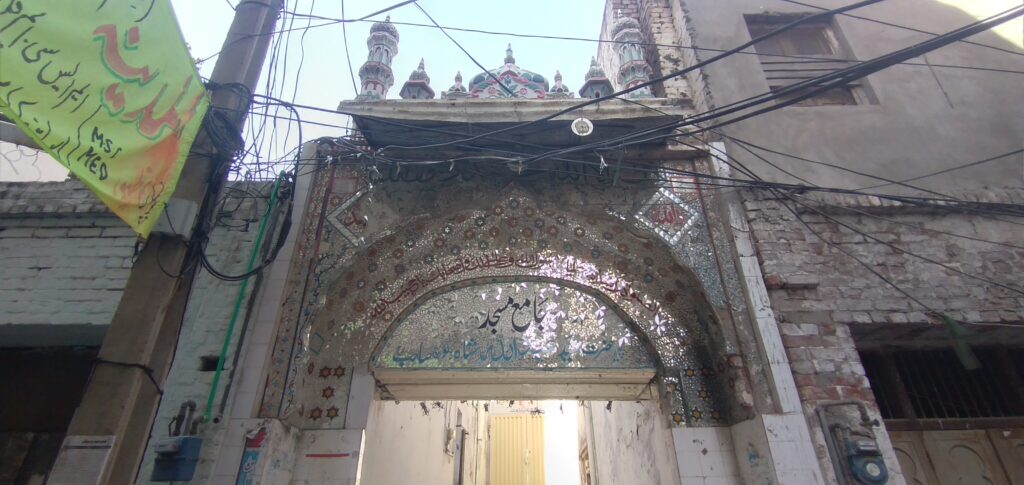
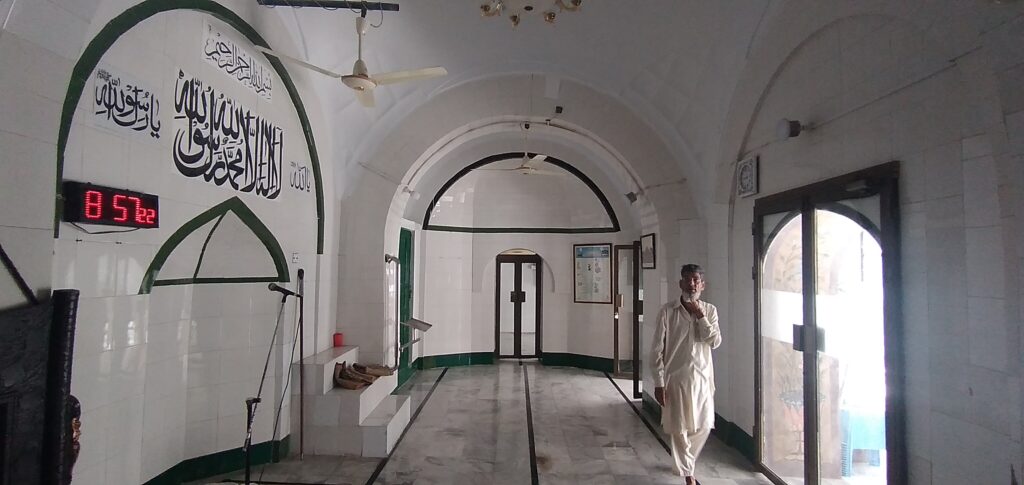
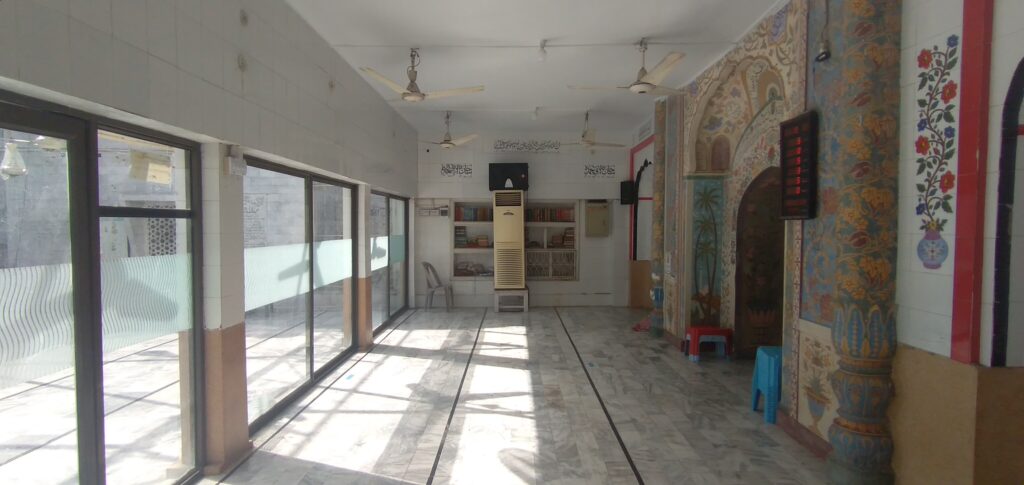
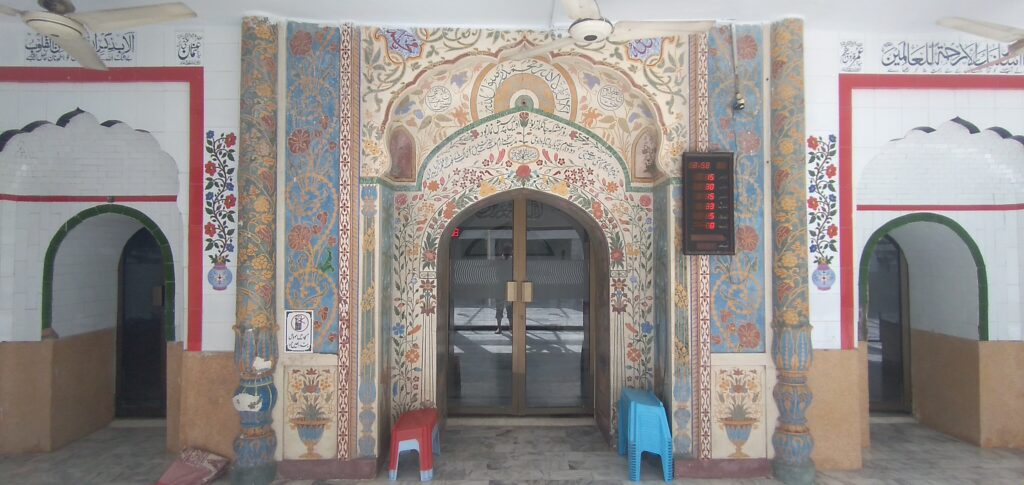
The entrance is decorated with beautiful stained glass, which creates colorful patterns when sunlight passes through it. On the left side of the corridor, there is a small bathroom, and on the right side, a living space. From the staircase, the courtyard can be seen, covered completely in white plaster.
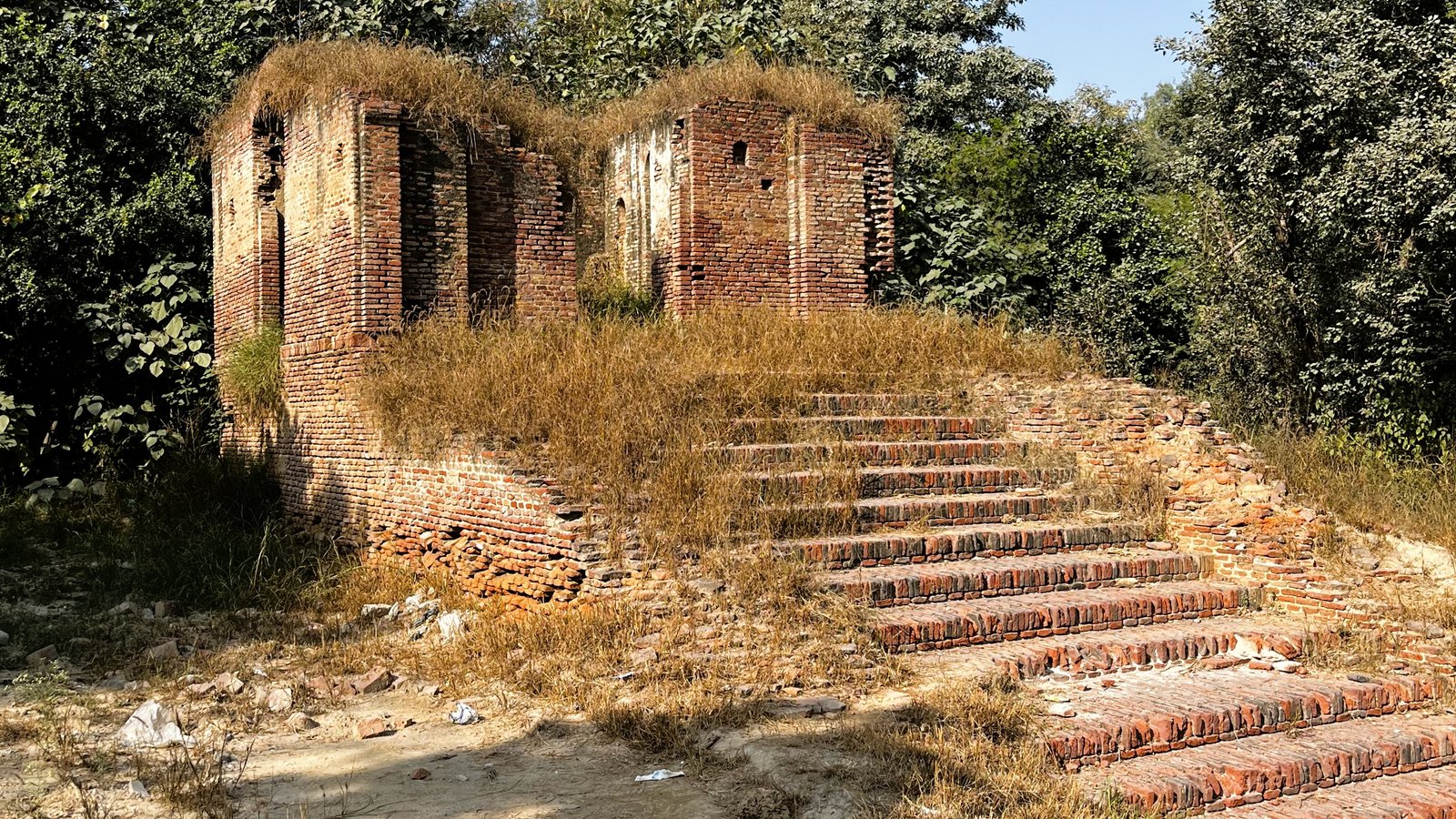
Over time, the ground level around the mosque has risen. Because of this, much of the original structure is now buried underground. During some recent work, new rooms and arched halls were found under the ground, revealing how large the mosque once was. The roof of the mosque remains in its original condition, showing the quality of materials and design used centuries ago.
This mosque stands as a fine example of pre-colonial architecture, mixing simplicity with grace.
Historical Changes and Importance
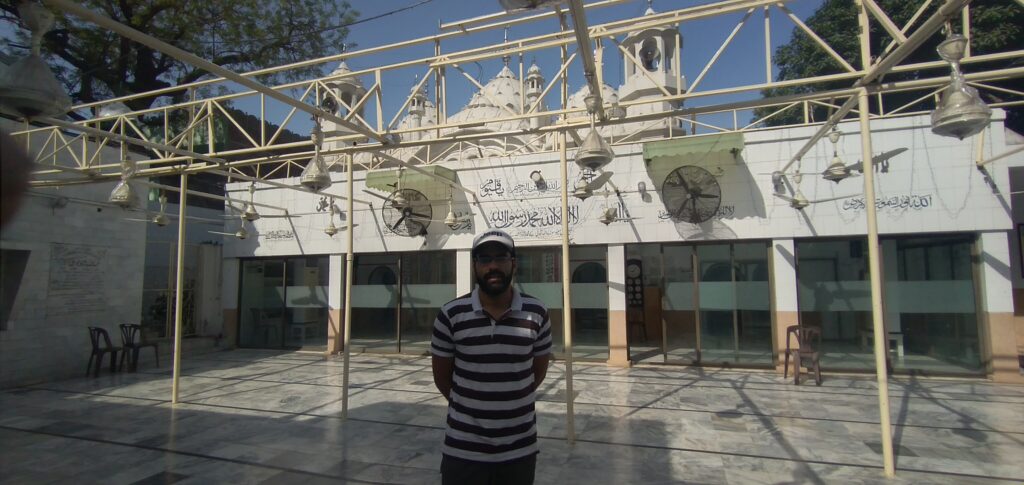
Through the Sikh period, the British era, and modern times, Masjid Sardar Jahan Mozang has survived many changes. Its different names reflect the changing identity of Lahore itself. Many small mosques in the city were either forgotten or destroyed during urban growth, but this one continued to stand because of its spiritual link to Hazrat Abdullah Shah Baloch.
Even today, people from the area visit both the mosque and the shrine. The mosque’s daily expenses are managed through donations and rent collected from nearby rooms. Though resources are limited, the caretakers have kept the mosque alive for prayers and religious gatherings.
You can read: British Heritage (1)
Cities (2)
Hindu Heritage (2)
Muslim Heritage (5)
Sikh Heritage (1)
Current Use of the Mosque
Today, Masjid Sardar Jahan Mozang serves as a Jamia mosque, where regular prayers are held. The building may be old, but it remains full of life. The mosque is a center of spiritual and community activity. Around it, the streets of Mozang have become crowded, yet the mosque still stands as a calm and sacred space.
Its caretakers continue to look after it with devotion. The walls may have been repainted, and some changes may have been made, but its essence remains untouched.
For more stories about old mosques that survived the test of time, you can explore The Hidden Mosques of Old Lahore and Miani Sahib Graveyard: City of Saints Beneath the Soil.
My Personal Experience
As someone connected to Mozang by family roots, visiting Masjid Sardar Jahan Mozang was a deeply emotional experience for me. The first time I saw that old photograph of a lone mosque, I never imagined that one day I would stand before it. When I finally reached it, the moment felt magical.
I remember walking through its narrow entrance, feeling the cool touch of its ancient walls. The light coming through the stained glass filled the space with color and calmness. The silence inside was powerful, as if the walls were still whispering prayers from centuries ago. I could feel the weight of history beneath my feet.
It was not just a mosque; it was a living memory of Mozang itself.
Conclusion
Masjid Sardar Jahan Mozang is a reminder of Lahore’s deep roots and living traditions. It tells a story of faith, time, and resilience. Despite being surrounded by modern life, it has not lost its soul. It connects us to the spiritual and cultural identity that shaped this city.
Exploring Mozang is like walking through history. Every corner has a story, and every structure carries a memory. Among them, Masjid Sardar Jahan Mozang stands quietly, inviting us to pause and listen to the city’s heart.