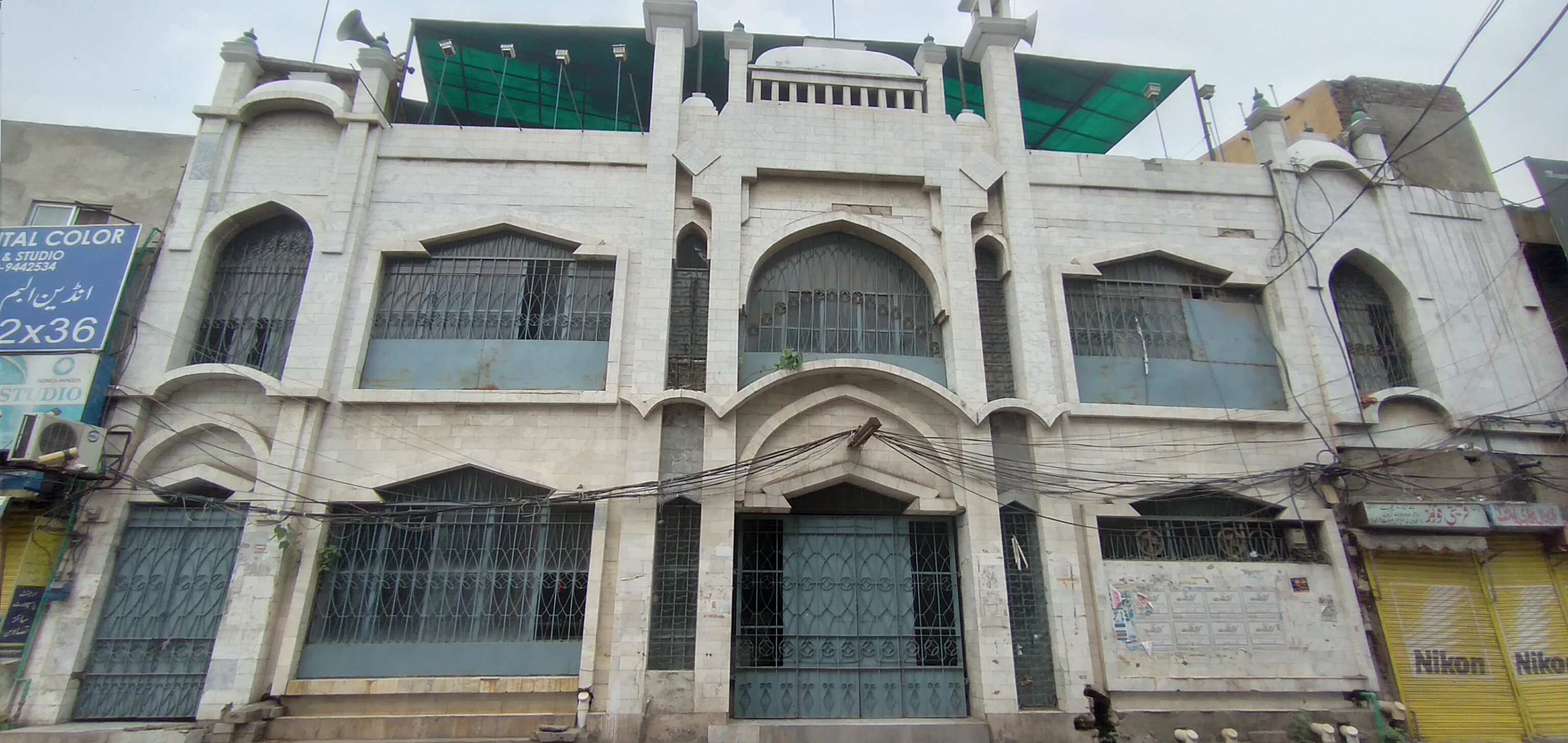
In the living tapestry of Lahore historical mosques, few names evoke as much quiet curiosity as Masjid Dai Ladoo. Tucked deep inside the bustling lanes of the city’s Camera Market, this centuries old structure remains invisible to the untrained eye, yet it carries within its walls a story woven with Mughal royalty, devotion, and silent endurance. The mosque bears the memory of a woman known to history as Dai Ladoo, a royal midwife whose presence in the court was marked by trust, compassion, and remarkable proximity to the rulers of her time.
History
Masjid Dai Ladoo dates back to the glorious age of the Mughal Empire. Historians continue to debate the exact period in which Dai Ladoo lived. Some place her in the era of Akbar, suggesting she nursed Prince Saleem, while others associate her with the reign of Jahangir and believe she cared for the young Shah Jahan. Although the details differ, one truth stands firm. Dai Ladoo was deeply respected within the royal household, a woman entrusted with the upbringing of princes destined to shape the subcontinent.
The mosque itself was constructed during the reign of Shah Jahan. It is said that Dai Ladoo prepared her burial place within the mosque during her lifetime, wishing to remain eternally close to the sacred space she had built. After her passing, she was laid to rest within it.
With the decline of Mughal power following Aurangzeb’s era, the mosque too began to lose its standing. During the Khalsa Raj, it was occupied by a Hindu yogi. Later, during British rule, Syed Qutb Shah reclaimed it for the Muslim community. Each chapter of its history reflects the shifting political and cultural landscapes of Punjab.
Architectural Character
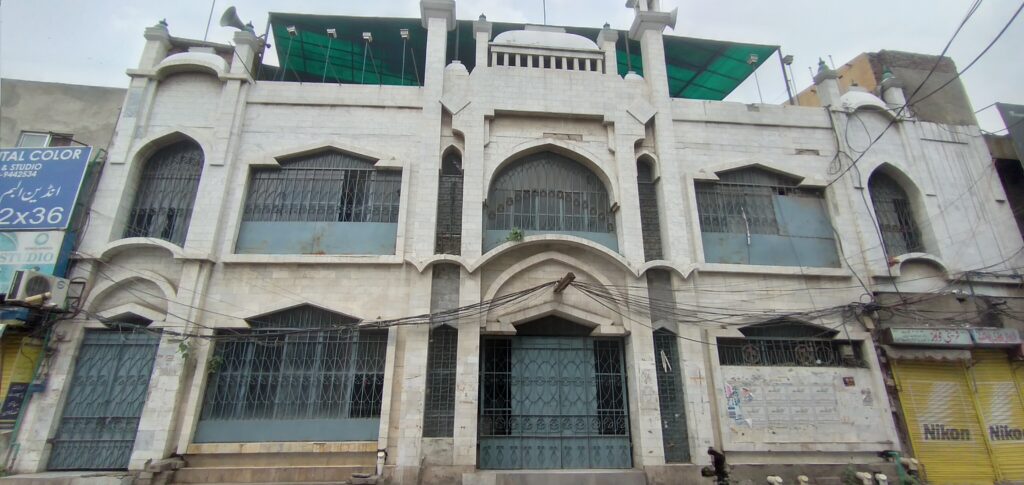
At first glance, one may struggle to identify Masjid Dai Ladoo as a heritage structure. Modern renovations have transformed much of its original appearance. Yet, if you pause and look closely, fragments of the past emerge gently from behind the layers.
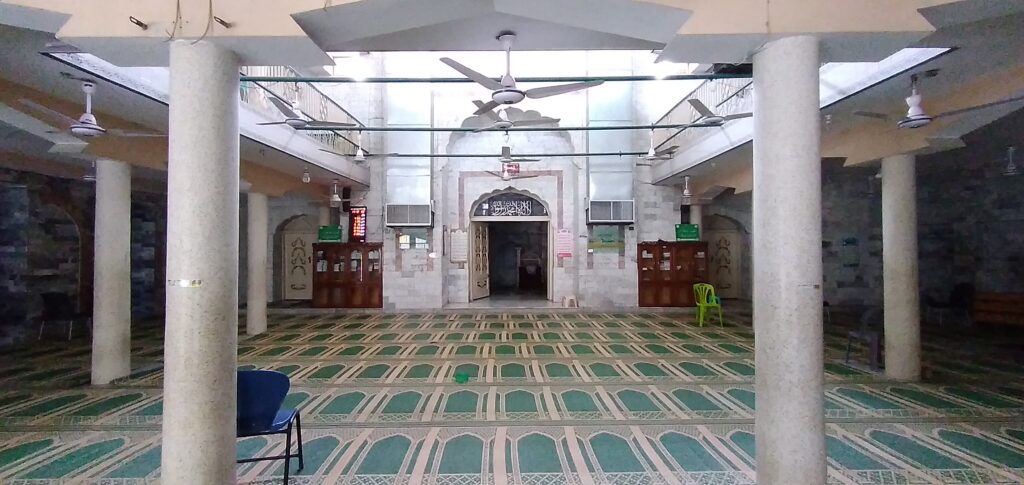
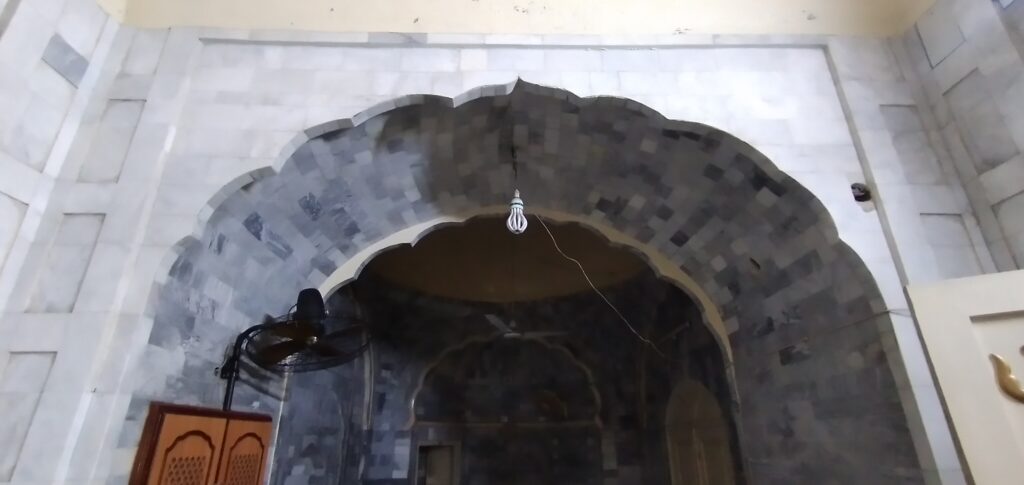
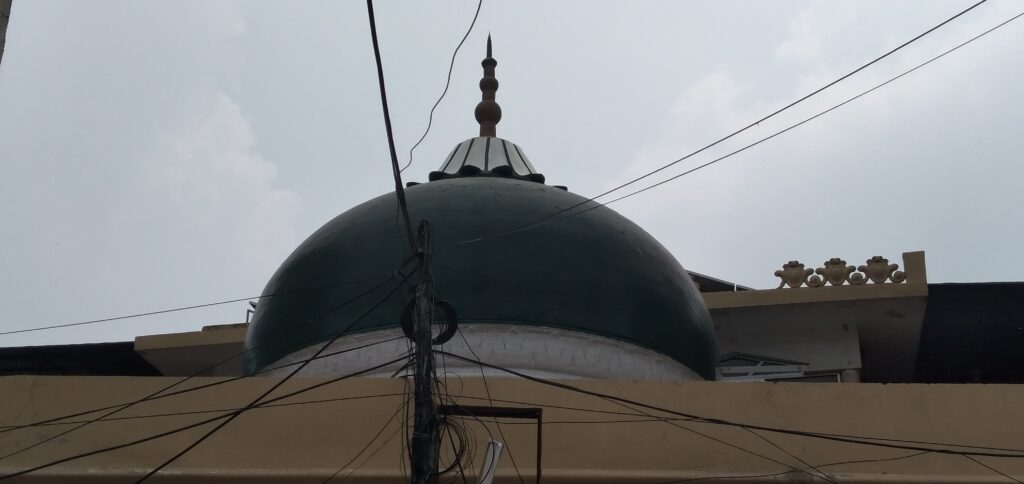
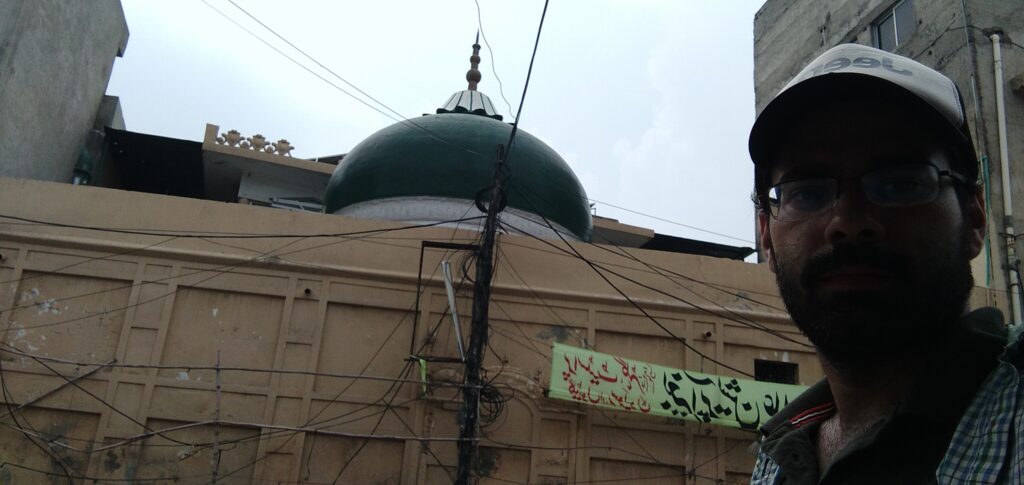
The main hall is spacious with a high ceiling, suggesting its historical use for communal prayer. The arches, although altered, still hint at Mughal proportions. Most heritage elements vanished during reconstruction, including the grave of Dai Ladoo herself. Still, a single yellowed wall behind the mosque stands as a witness to its true age. It reveals Nanak Shahi bricks beneath patches of plaster, a signature of Mughal construction.
This subtle survival of material history is what makes the mosque extraordinary. It is both present and hidden. Modern and ancient. Forgotten but not fully erased.
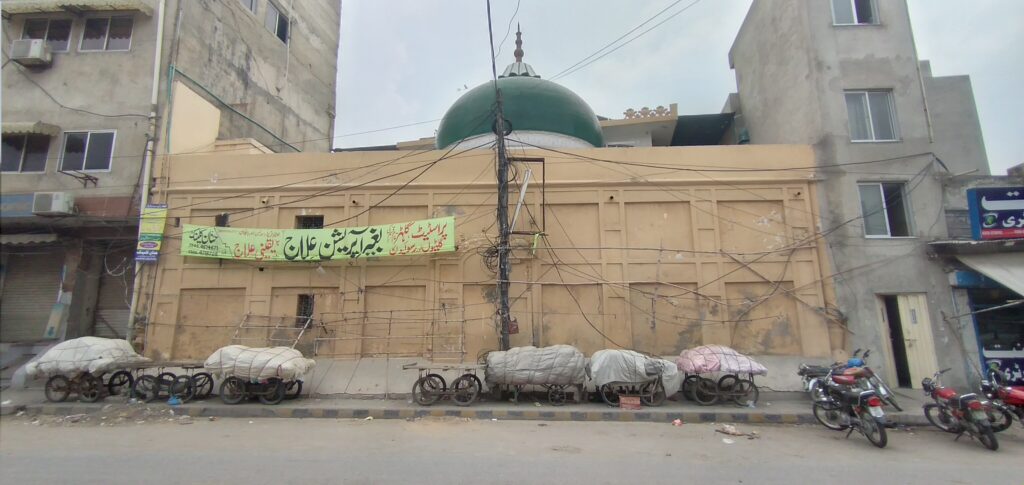
Ancient wall or Nanak Shahi bricks
Important Historical Events
Masjid Dai Ladoo stands at the intersection of several key historical moments.
• It reflects the Mughal tradition of honoring women who served the royal household.
• It shows how religious spaces in Lahore evolved, endured, and adapted through colonial and pre colonial conflicts.
• Its temporary occupation during the Khalsa Raj adds another layer of cultural transition.
• Its restoration during the British period signals the continued reverence local communities held for Mughal legacies.
This pattern of decline, occupation, and reclamation mirrors many other Lahore heritage sites, which makes it an important reference point in understanding the city’s architectural journey.
Current Use of the Mosque
Today, Masjid Dai Ladoo functions as an active prayer space in the heart of the Camera Market. Traders, shopkeepers, and visitors step inside for congregational prayers, often unaware that they are standing in a place built during the Mughal age. No plaque, inscription, or formal marker tells the passerby that this is a heritage mosque several centuries old.
While the renovations have modernized its interior, the mosque still carries an aura of calm. Its silent walls, though overshadowed by the market’s bustling world of lenses and electronics, continue to breathe with the memory of its origin.
For those interested in heritage tourism, this mosque represents the category of hidden monuments. You cannot experience it through the facade. You must walk inside. You must look carefully. You must let the place speak.
Personal Experience
As an archaeologist and heritage explorer, stepping into Masjid Dai Ladoo feels like entering a layered memory. There is a softness in its quiet corners, a sense of humility in how it stands without display, without pride, without claiming its own grandeur.
I remember my first visit. The market noise dissolved as soon as I stepped inside. The hall felt familiar, almost like a forgotten chapter of Lahore had opened itself gently before me. When I looked at the exposed Nanak Shahi bricks on the ancient rear wall, it felt like a whisper from the Mughal world. Dai Ladoo’s story, though overshadowed by time, lives on as an intimate reminder of the women who shaped history quietly, without monuments or inscriptions.
Places like this shape the spirit of my work. They remind me why we must continue to document and share our heritage. They reaffirm the purpose behind projects like Masjid Sardar Jahan Mozang.
It teaches us that heritage is not only the grand forts and marble mausoleums we proudly showcase. It also lives quietly in modest structures, in personal histories, and in the footprints of people who shaped royal courts while remaining outside the spotlight. If you would like to explore more hidden heritage sites, such as Masjid Dai Ladoo, through immersive storytelling, customized tours, or research-backed heritage experiences, connect with me through my website. Join me in rediscovering Lahore one forgotten corner at a time, and let these silent stones narrate their timeless stories.