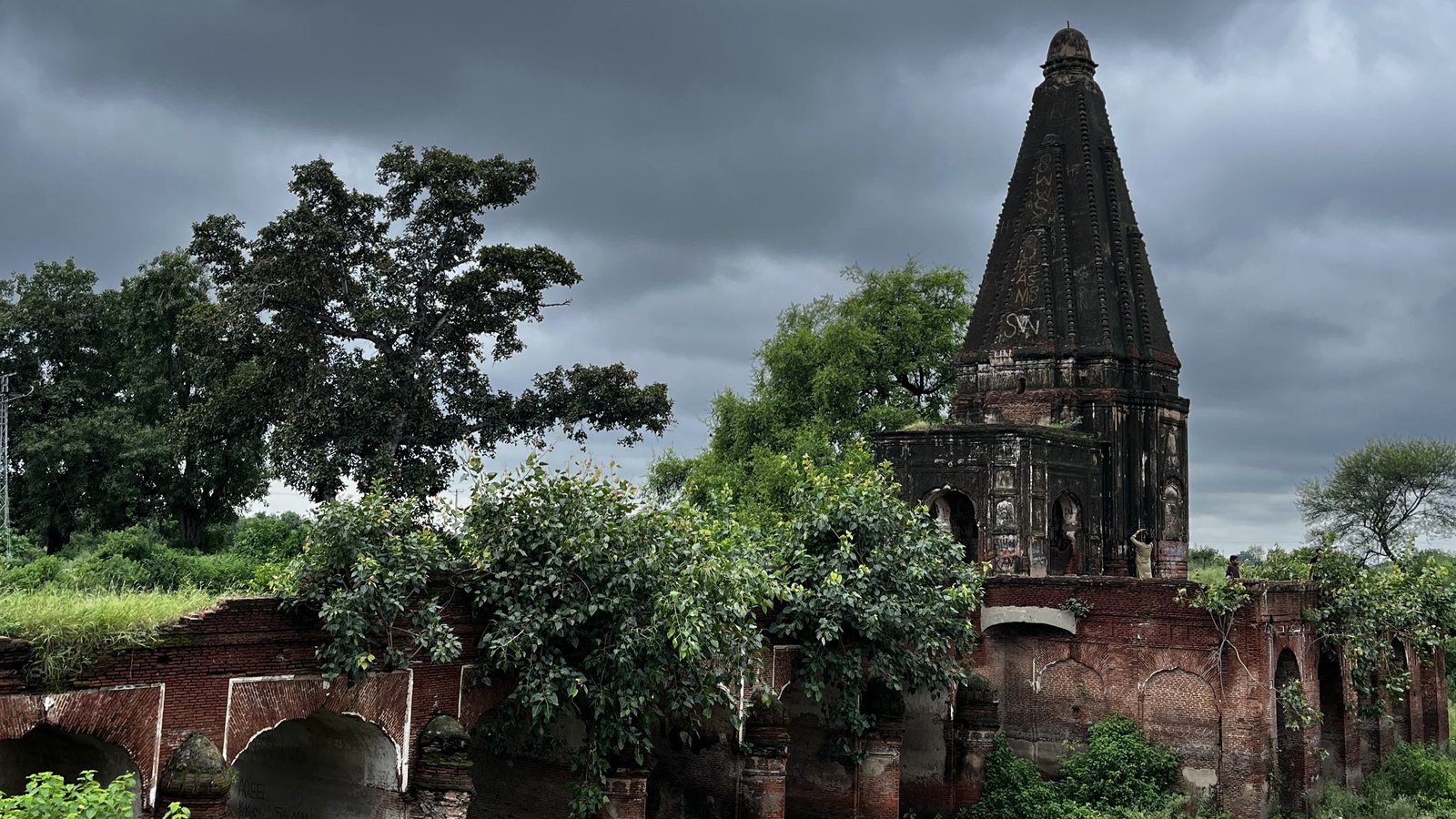
Hindu Temples in Pakistan are not merely relics of stone and brick. They are echoes of layered civilizations, spiritual journeys, and shared histories. In District Gujranwala, within the village of Baddoki Gosaian, stands Tomri Sahib Mandir, a site that today appears silent and neglected, yet once radiated devotion and reverence.
Where buffaloes now graze and wild shrubs entangle the walls, this sacred complex once welcomed pilgrims. Its surfaces may bear careless graffiti today, but its foundations still hold memory. As an archaeologist and heritage explorer, I invite you to step beyond the visible ruin and rediscover its deeper meaning.
Who
Tomri Sahib Mandir is traditionally associated with Sidh Baba Sai Das, regarded as the founder of the Gosain or Goswami community. His life is linked to the same spiritual era as Guru Nanak Dev, placing this site within a formative period of regional spirituality.
What
It is a Shiv Mandir that functioned as a complete temple complex rather than a single shrine. Over time, it became a devotional center serving religious, residential, and social purposes.
When
Although precise construction dates remain uncertain, its spiritual origins trace back several centuries. Architectural features suggest it evolved across different historical phases, with communities contributing to its development.
Where
The temple is located in Baddoki Gosaian, District Gujranwala, Punjab, Pakistan. Its rural setting today conceals the fact that it once formed part of a vibrant sacred landscape.
Why
The site gained importance due to its association with Sidh Baba Sai Das and its spiritual authority within the Gosain tradition. Its connection to a major spiritual era elevated its regional status.
How
Through pilgrimage, patronage, and community engagement, the temple grew into a structured complex. Over time, shifting demographics and historical transformations led to its abandonment.
Architectural Significance
Tomri Sahib Mandir reflects regional construction traditions blended with symbolic sacred design.
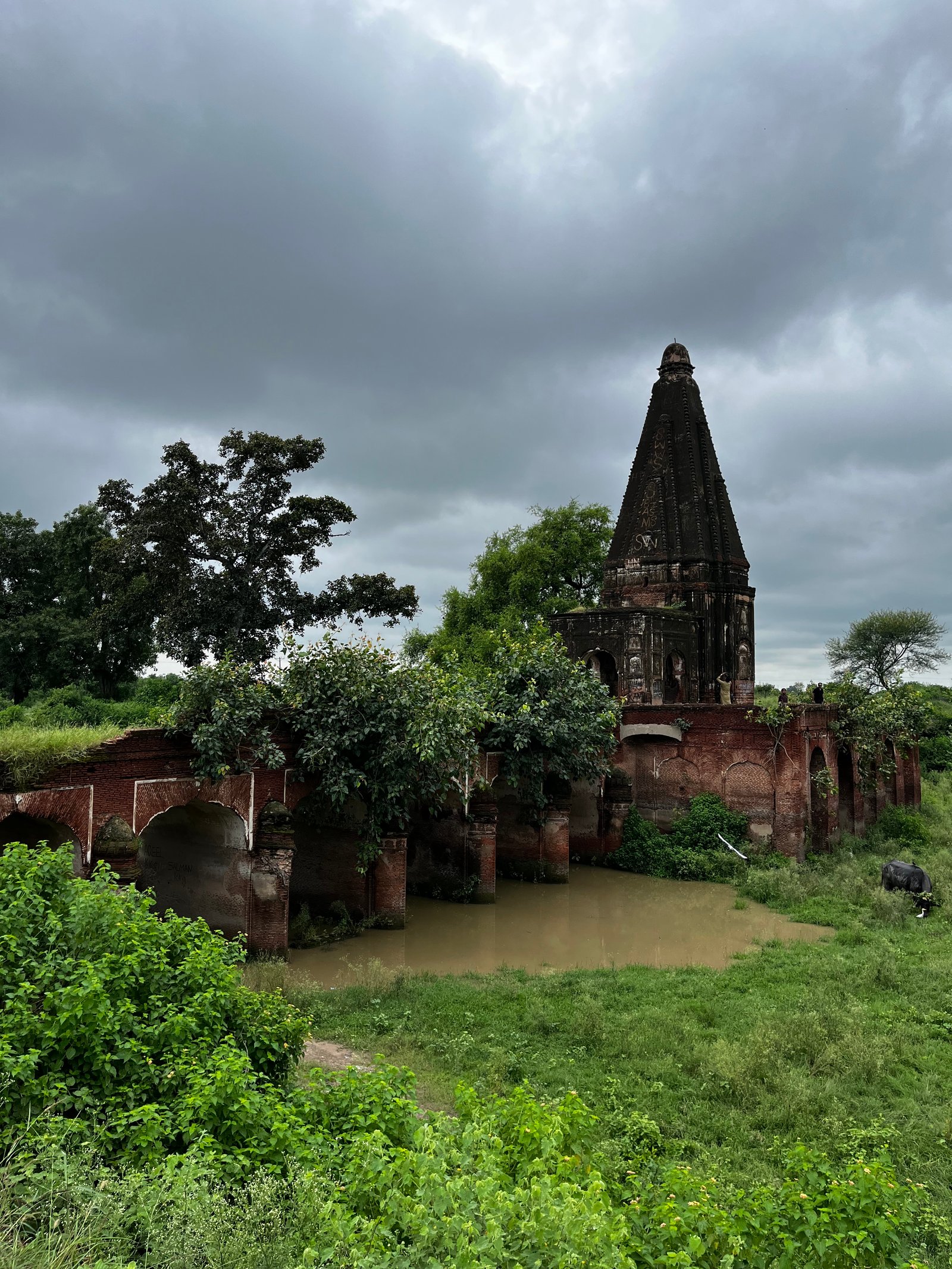
At its heart stood a temple constructed within a square shaped water tank. This integration of water and sanctity reflects ancient ritual symbolism found in many Hindu sacred spaces. A walkway composed of eight elegant arches formed a defining architectural feature. The symmetry of these arches suggests careful planning and aesthetic intent.
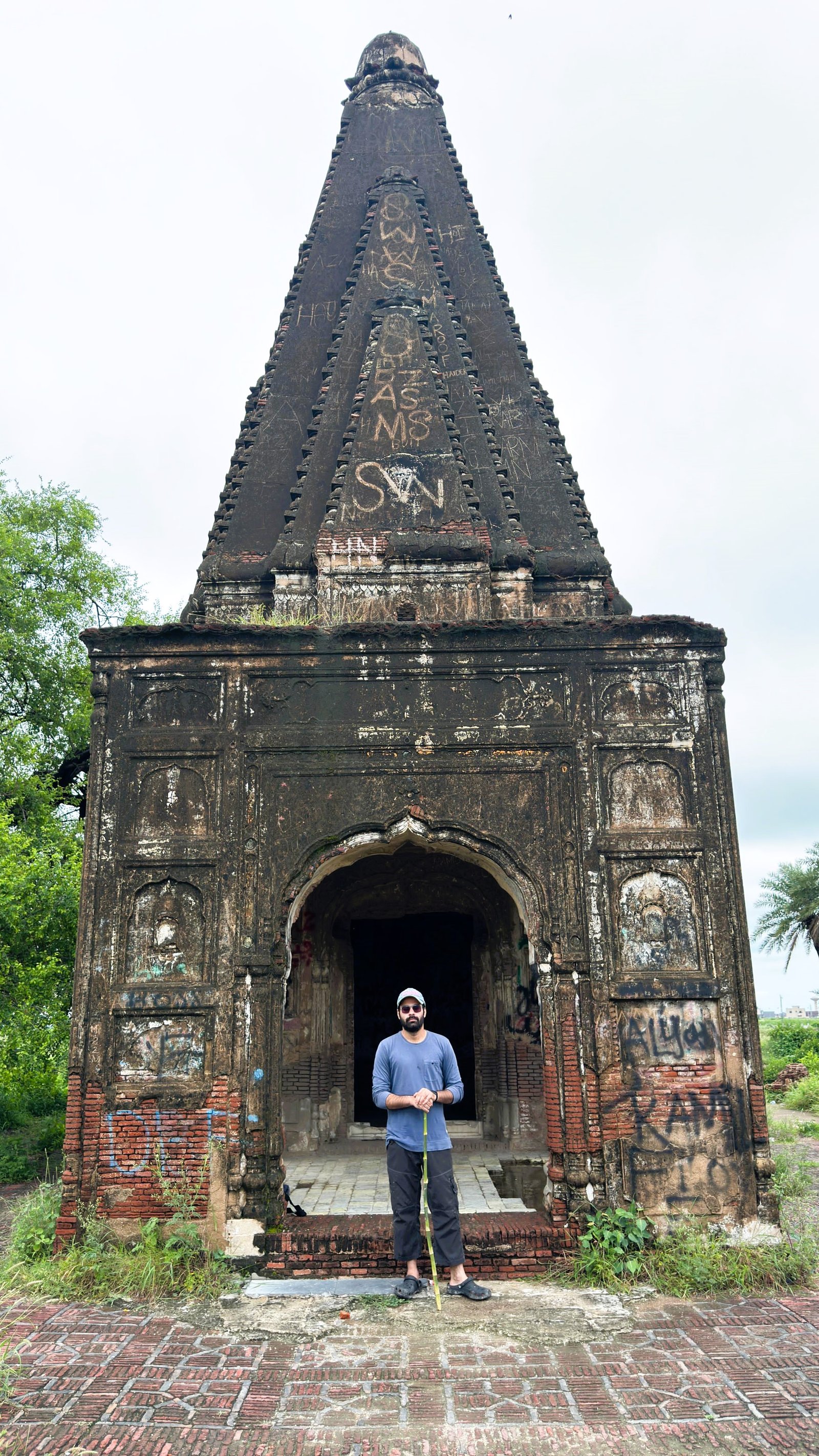
Access to the inner sanctum required ascending ten steps, reinforcing both physical and spiritual transition. The structure was built primarily with small bricks, characteristic of regional masonry traditions. White marble ornamentation enhanced the sacred character of the building.
Adjacent to the main temple were a dharamshala and residential quarters, indicating accommodation for pilgrims and caretakers. Within the enclosure stood a banyan tree, traditionally associated with spiritual continuity and protection.
To help visualize its former grandeur, an AI generated reconstruction was prepared. It presents the temple as an organized sacred ensemble surrounded by water channels and walkways, offering viewers a glimpse into its possible original form.
If you are interested in more sacred architectural spaces, you may explore
- Mughalpura Railway Station Lahore: A Forgotten Chapter of Industry and Partition
- Baolis in Lahore: A Forgotten Mughal Stepwell Near Manga Mandi
- MUGHAL HERITAGE SITES IN PAKISTAN: A FORGOTTEN MUGHAL BRIDGE NEAR SHAHDARA
- British Raj Architecture in Lahore and the Forgotten Soul of Krishna Nagar
Important Historical Context
The temple’s association with Sidh Baba Sai Das places it within a spiritually dynamic period in Punjab’s history. The era connected with Guru Nanak Dev witnessed vibrant interfaith interactions and the emergence of multiple devotional traditions.
Over centuries, the complex likely adapted to social and political changes. While specific documented events remain limited, the architectural layering indicates continuous usage across different communities.
Following the mid twentieth century demographic transformations in the region, many Hindu religious sites in rural Punjab experienced abandonment. Tomri Sahib Mandir appears to have shared this fate.
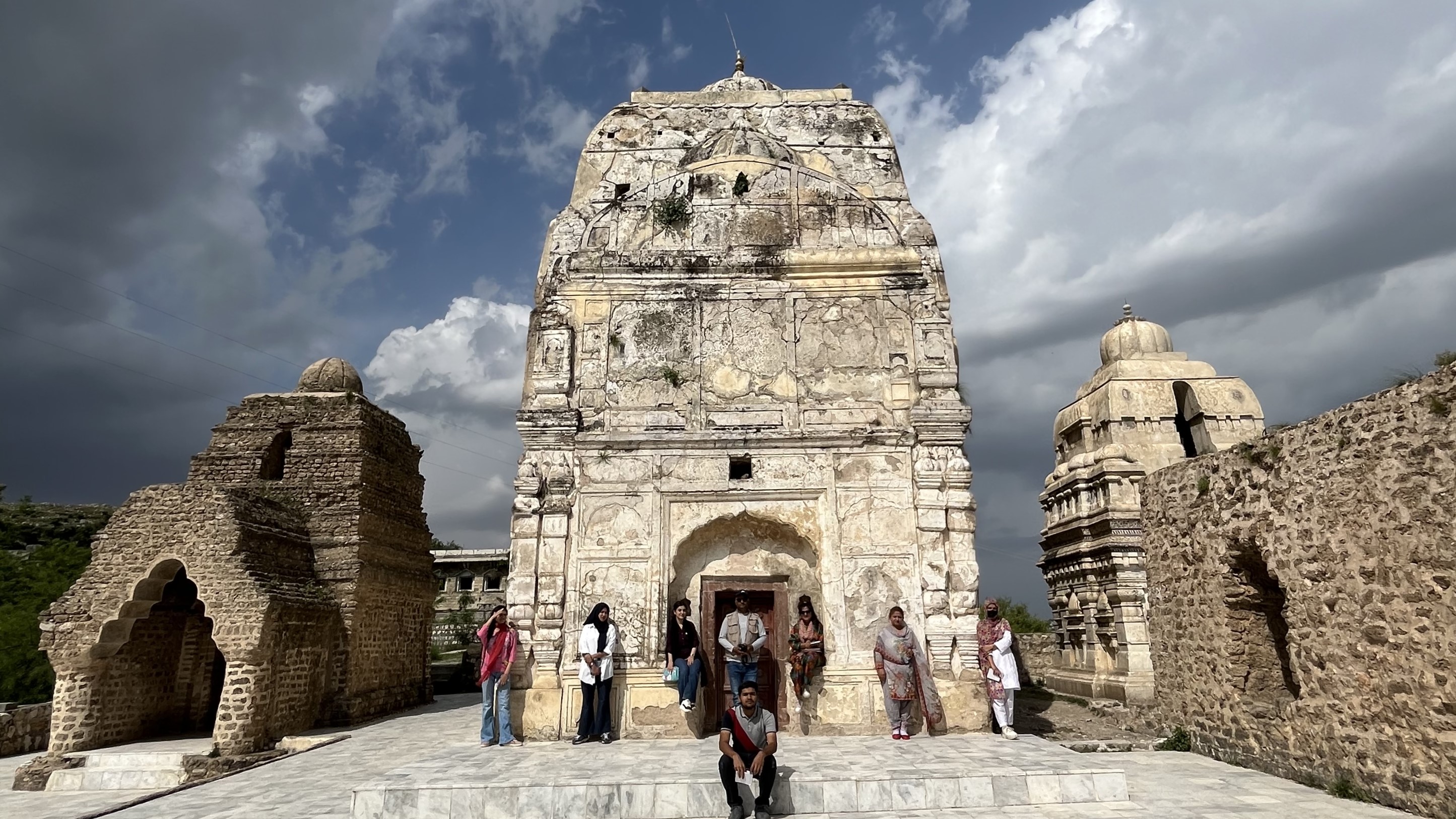
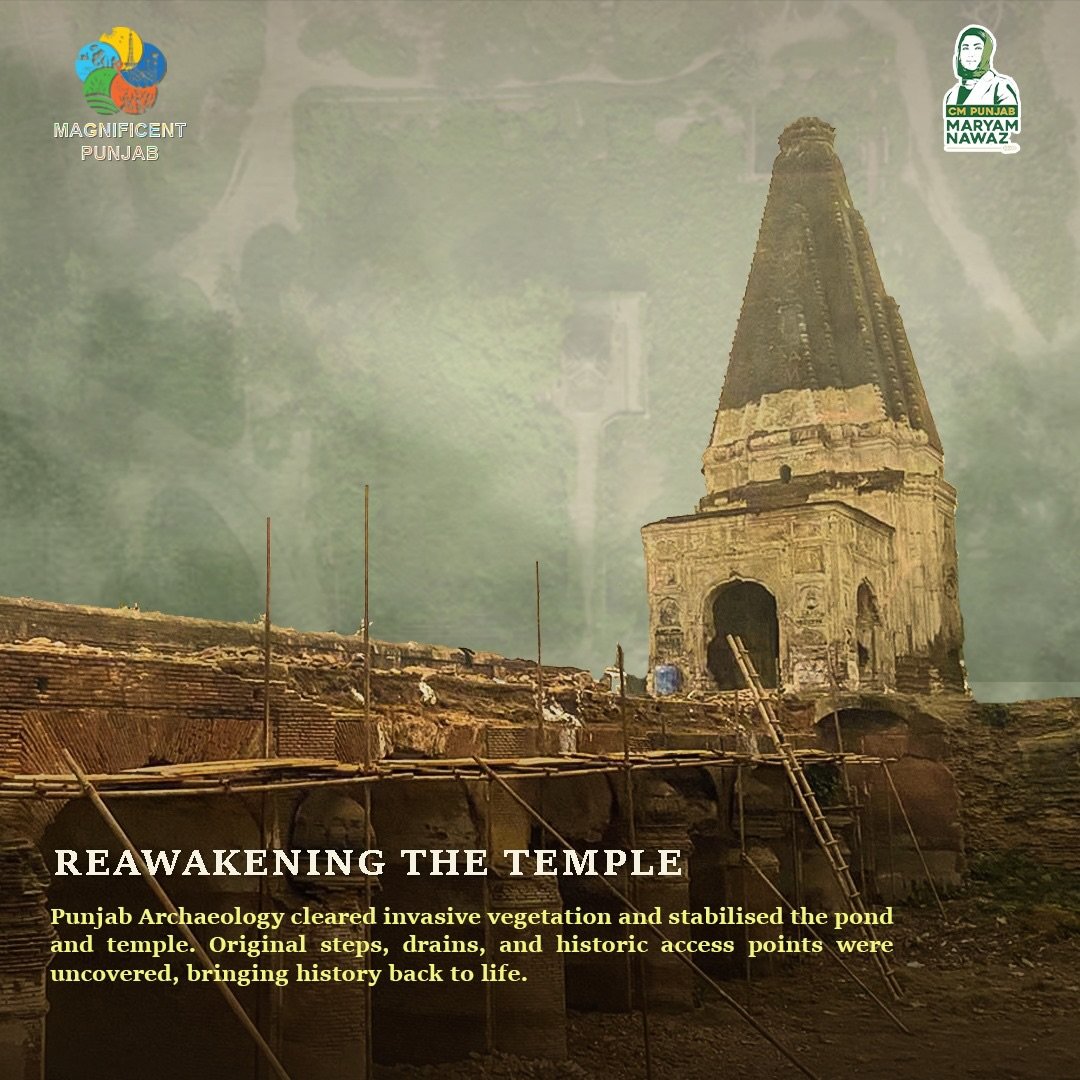
Recently, Dr. Ahsan Butt and his team visited the site. Encouragingly, restoration efforts are now underway. This marks a hopeful chapter in the preservation of Hindu Temples in Pakistan.

Current Condition and Use
Today, the temple stands enclosed by vegetation. Its walls show signs of neglect and informal markings. Yet structurally, it remains resilient.
The site is gradually moving toward restoration. The vision is not merely to repair bricks but to revive dignity. If preservation continues thoughtfully, the temple may once again welcome visitors, researchers, and heritage enthusiasts.
Its restoration also strengthens the broader narrative of inclusive heritage conservation in Pakistan.
My Personal Experience at the Site
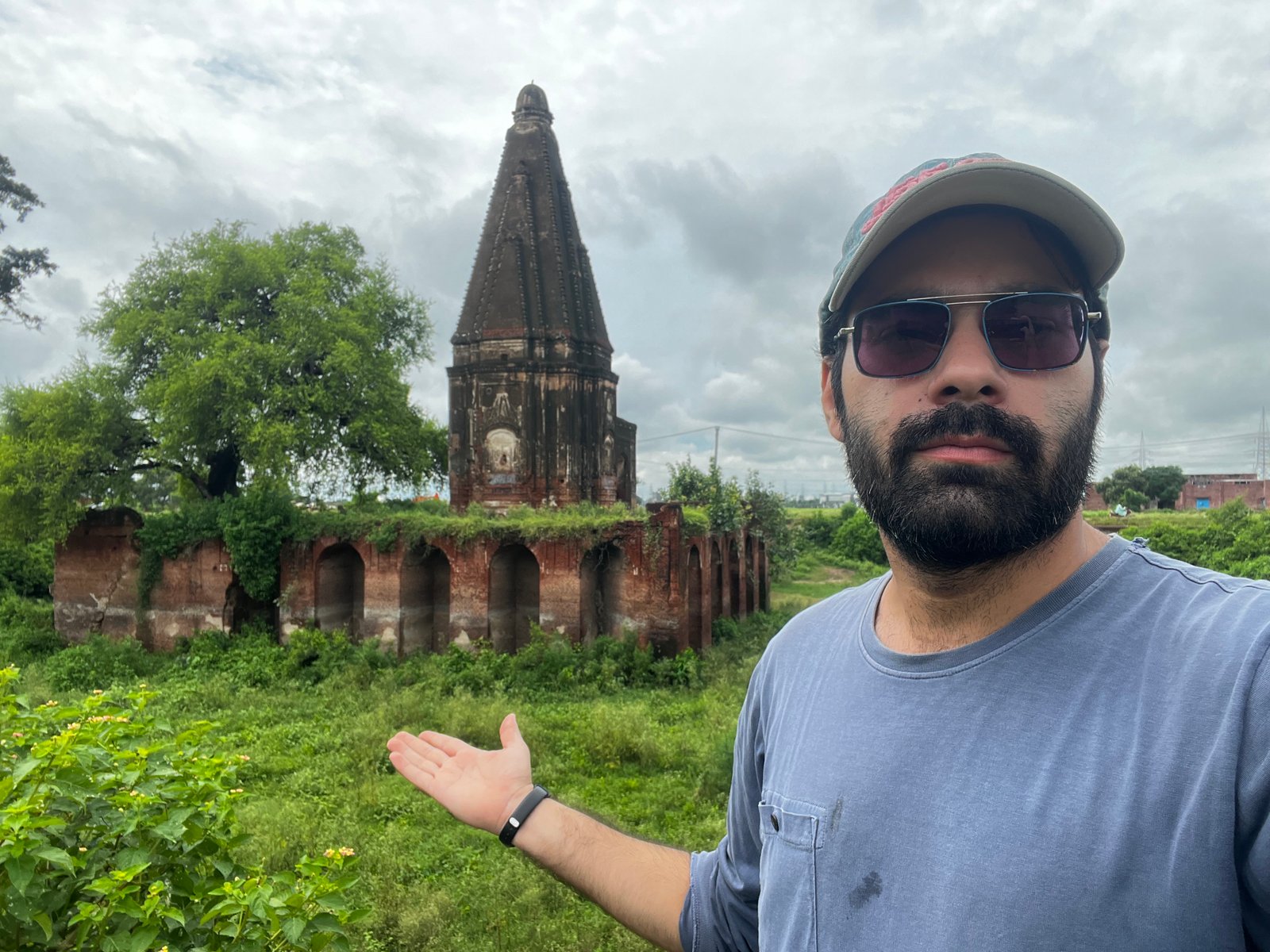
When I first approached Tomri Sahib Mandir, I was struck by the contrast between silence and memory. The rural calm concealed centuries of devotion.
Standing within the square tank, I imagined pilgrims ascending the ten steps. I traced the arches with my eyes, sensing geometry that once framed sacred processions. The banyan tree seemed less like vegetation and more like a witness.
As a heritage guide, moments like these reaffirm my mission. Preservation is not about nostalgia. It is about responsibility. Every neglected temple, shrine, or monument is a chapter waiting to be retold with respect.

Why Hindu Temples in Pakistan Matter Today
Hindu Temples in Pakistan represent more than architectural remnants. They reflect plural histories, layered identities, and shared spiritual landscapes.
For heritage tourism in Punjab, such sites offer meaningful experiences beyond conventional travel. They invite visitors to understand continuity rather than division. They also create opportunities for responsible tourism, research collaborations, and cultural dialogue.
By documenting and guiding tours to such places, we ensure they are remembered not as abandoned ruins but as living narratives.
If you are passionate about heritage, cultural travel, or interfaith history, I invite you to explore these spaces with me.
Join a guided heritage tour. Collaborate on documentation projects. Support preservation efforts. Let us walk through forgotten courtyards not as spectators, but as custodians of memory.
Visit saadzahid.co to discover upcoming tours, workshops, and heritage storytelling initiatives. Together, we can ensure that the story of Tomri Sahib Mandir and other Hindu Temples in Pakistan continues to inspire future generations.