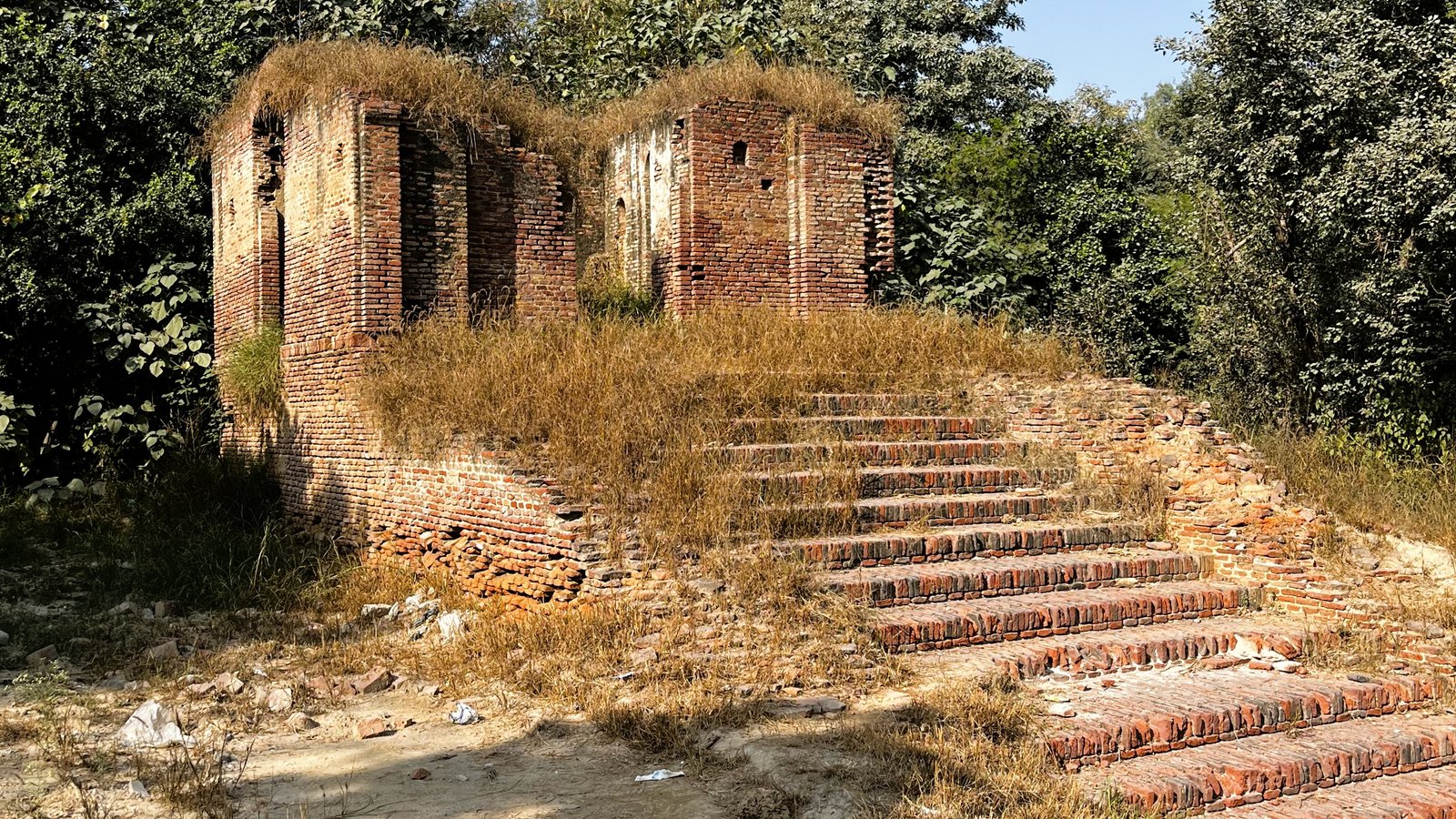
When we talk about baolis in Lahore, we often remember only a handful of surviving examples. These ancient stepwells once formed the backbone of water management, travel, and settlement across the region. Within Lahore itself, only two baolis remain visible today, both of which I have previously documented. However, just beyond the city limits, near Manga Mandi, lies a forgotten baoli that tells a much larger story of Mughal engineering, caravan routes, and neglected heritage.
Located within the premises of Ali Garh Public School & College, this baoli stands silently, hidden beneath vegetation and neglect, yet rich in historical value. Exploring this site offers not only a glimpse into Mughal-era infrastructure but also raises serious questions about preservation and awareness.
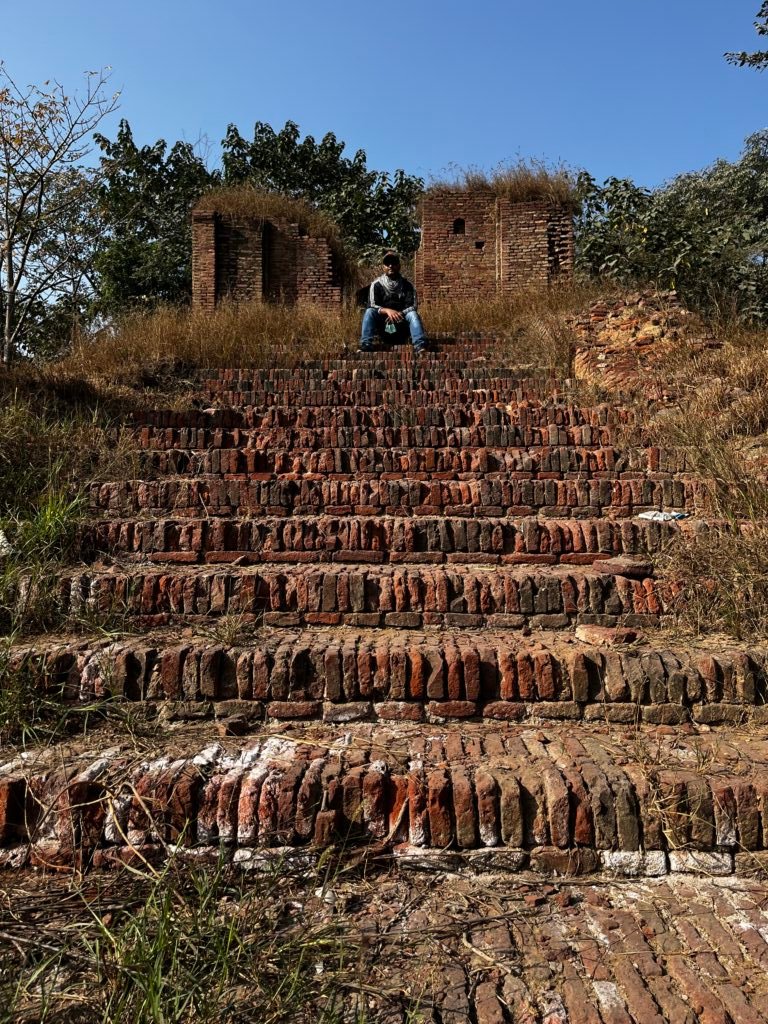
What is this baoli
This structure is a historic stepwell designed to collect and store water for travelers, caravans, and nearby settlements. Like other baolis in Lahore, it functioned as both a utility space and a social resting point.
Where is it located
The baoli is situated near Manga Mandi, within the grounds of Aligarh Public School, a short distance from Lahore city.
When was it built
Based on architectural features and roof texture, this baoli appears to belong to the later Mughal period, likely between the seventeenth and eighteenth centuries.
Who built it
While no inscription survives, baolis of this type were usually commissioned by Mughal administrators or local patrons to support trade and travel routes.
Why was it built
This region once lay along an ancient caravan route. Baolis were essential for providing water to traders, animals, and travelers moving between major settlements.
How did it function
Stone steps led down to the water level, allowing access regardless of seasonal changes. Adjacent rooms were likely used for rest or storage.
Caravan Routes and Historical Context
This baoli did not exist in isolation. The entire area was part of a historic travel corridor. Even today, remains such as Sarai Chanba and Sarai Mughal can be identified along the same route. These caravanserais confirm that this region once played a vital role in trade, movement, and cultural exchange.
Architectural Features
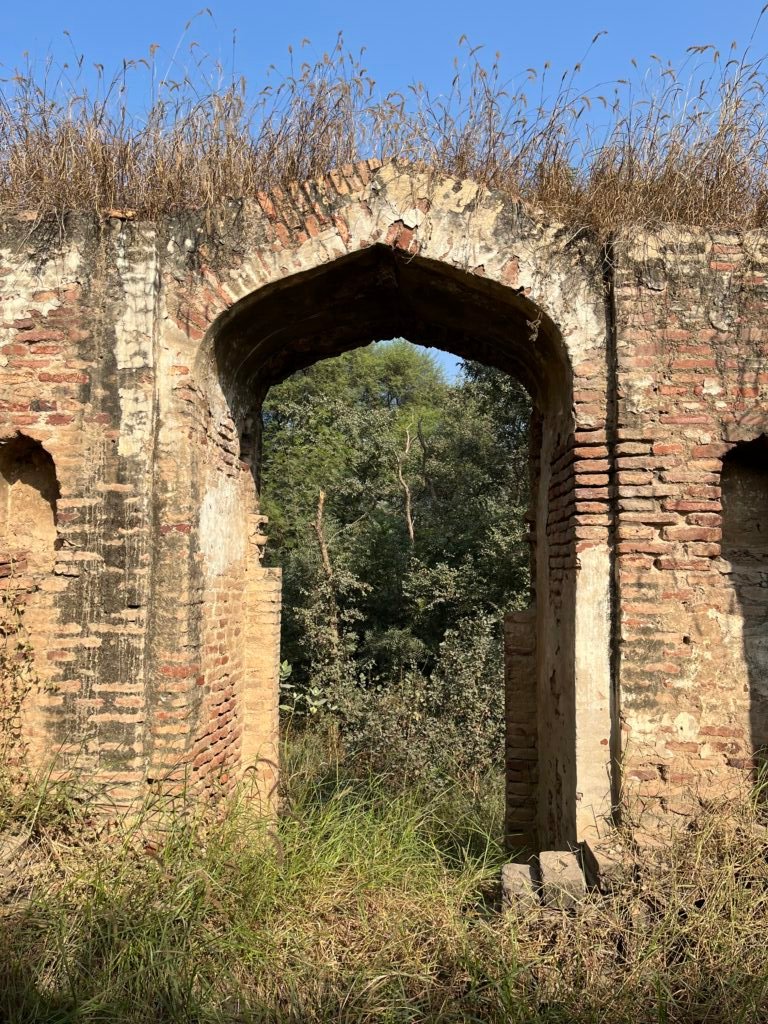
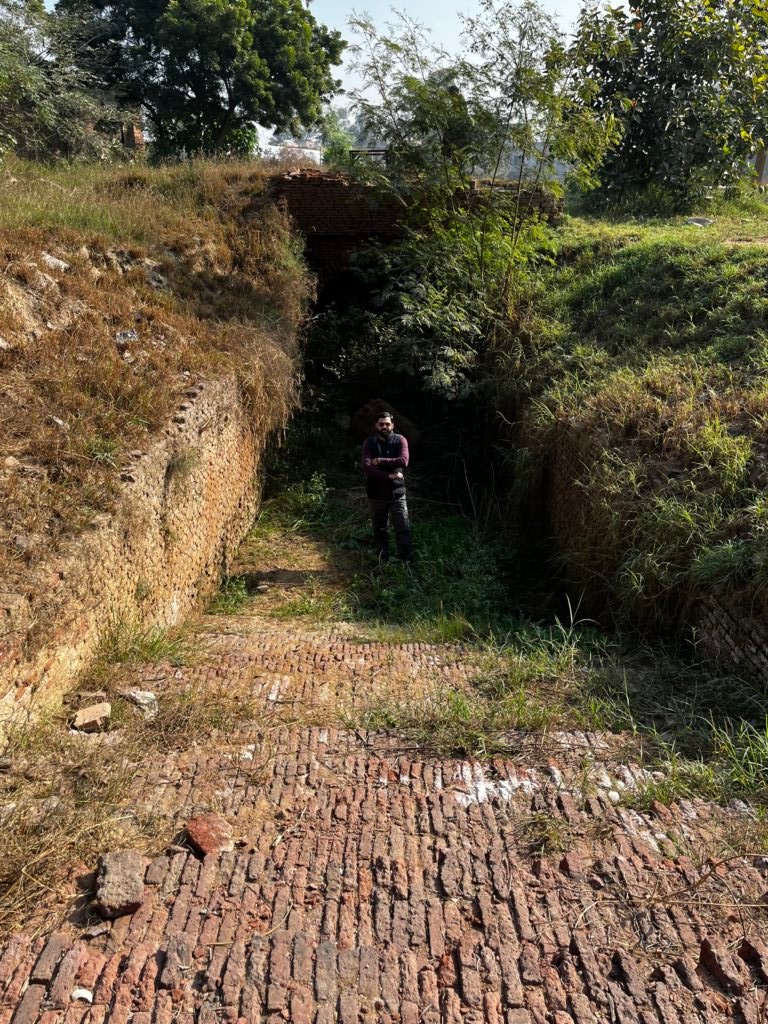
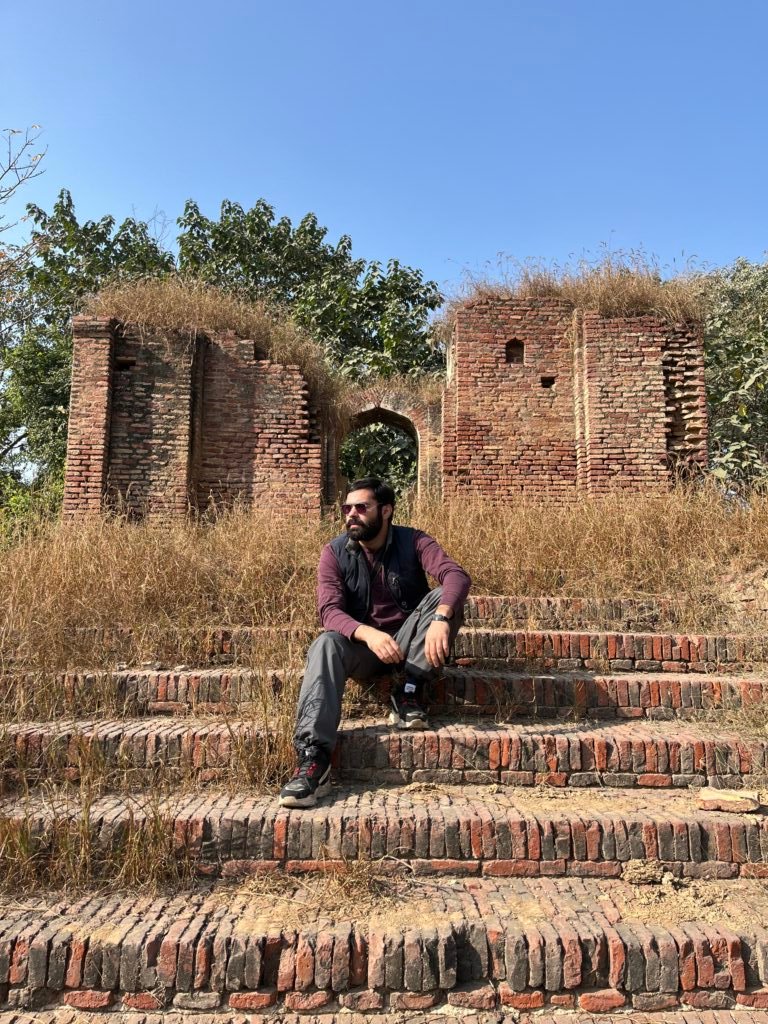
Architecturally, the baoli still reveals its original intent despite heavy damage. Stone arches remain visible, framing what was once a functional descent. A four walled chamber stands in a collapsed state, suggesting a resting or administrative space. The well itself has been blocked with bricks, cutting off access to its core function.
Dense bushes now surround the structure from all sides, obscuring its form and accelerating decay. Yet even in this state, the craftsmanship reflects Mughal sensibilities of symmetry, durability, and practicality.
For a broader understanding, readers can read:
MUGHAL HERITAGE SITES IN PAKISTAN: A FORGOTTEN MUGHAL BRIDGE NEAR SHAHDARA
British Raj Architecture in Lahore and the Forgotten Soul of Krishna Nagar
Sandhawalia Gurdwara and the Quiet Echoes of Heritage Tourism Lahore
Lahore Historical Mosques and the Forgotten Gem Called Masjid Dai Ladoo
Unearthing a Forgotten Sikh Heritage Site in Kahna Lahore

Important Historical and Cultural Associations
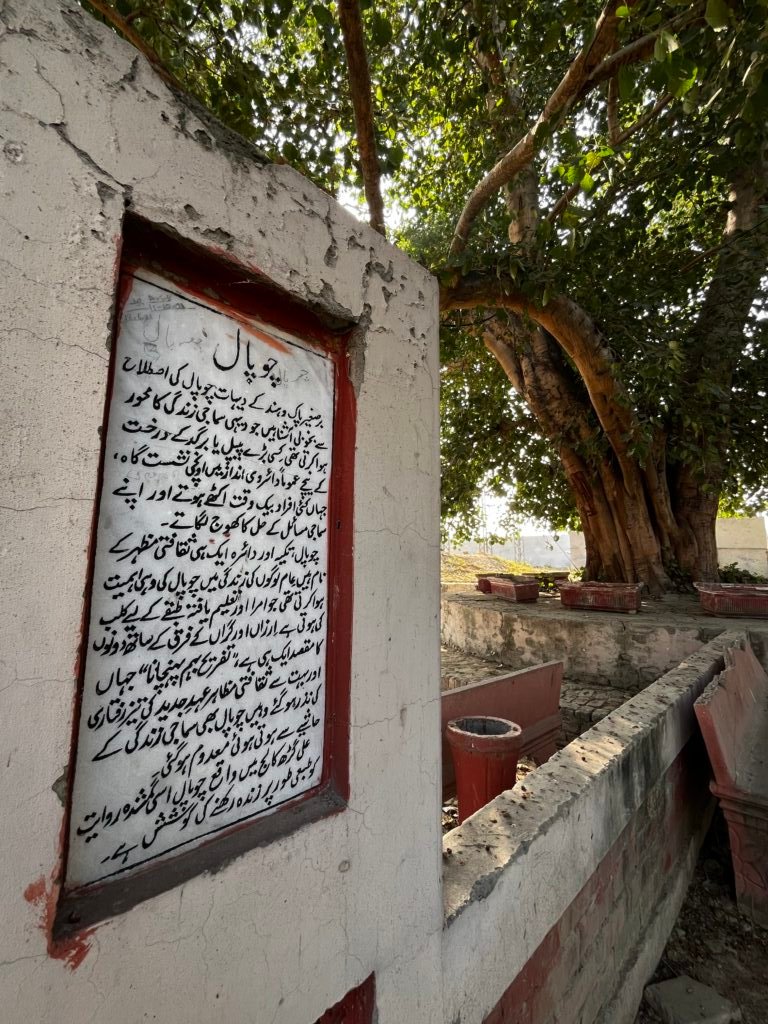
One of the most significant aspects of this site is its proximity to Chota Nankana Gurdwara, located immediately on the other side of the boundary wall. This physical closeness highlights the layered religious and cultural history of the region, where Muslim, Sikh, and trade related heritage coexist within the same landscape.
Such spatial relationships are essential when studying shared heritage in Punjab, and they add immense value to heritage based tourism and storytelling.
Current Condition and Use
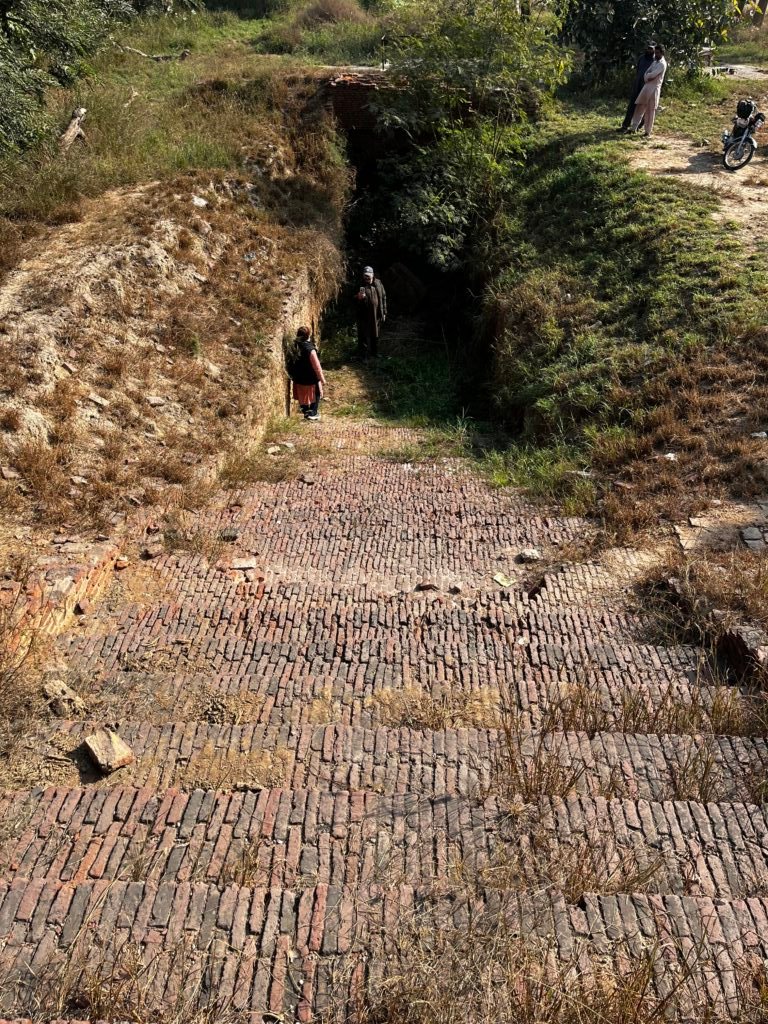
At present, the baoli is completely inactive. The steps leading downward have been removed, and the well has been deliberately sealed. No conservation measures are visible. Overgrowth has turned the site into a habitat for dangerous insects and animals, making access risky.
The responsibility for this site currently lies with the school administration, and without intervention, continued neglect may lead to irreversible loss.
My Personal Experience at the Site
I visited this baoli with my mentor, Dr. Muhammad Hameed, along with a few close friends. Descending into the structure required extreme caution due to poisonous insects and unstable surfaces. Standing inside, surrounded by silence and decay, it became painfully clear how disconnected we have become from our everyday heritage.
This was not merely an exploration, but a reminder that many baolis in Lahore and its surroundings are disappearing quietly, without documentation or advocacy.
Why This Baoli Still Matters
This site is not just a ruined well. It is evidence of how water, travel, religion, and architecture once intersected seamlessly. Preserving such places strengthens our understanding of Lahore beyond its city walls and reconnects us with forgotten narratives of movement and survival.
If stories like this matter to you, then heritage needs you as much as it needs historians. Read, share, visit responsibly, and speak about places others overlook.
Join my guided heritage walks, workshops, and storytelling journeys to explore Baolis in Lahore and beyond, not as ruins, but as living chapters of our shared past.